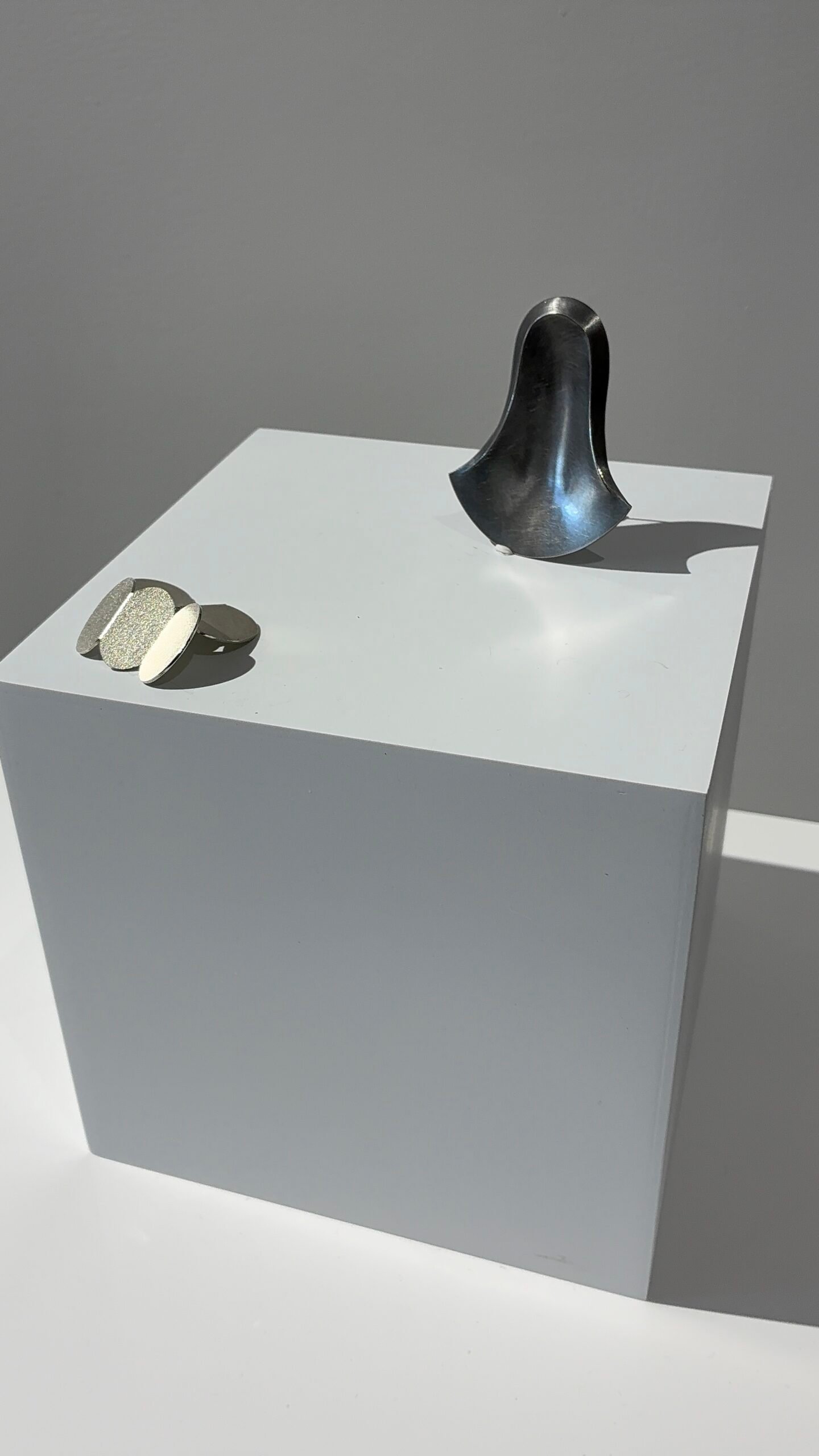
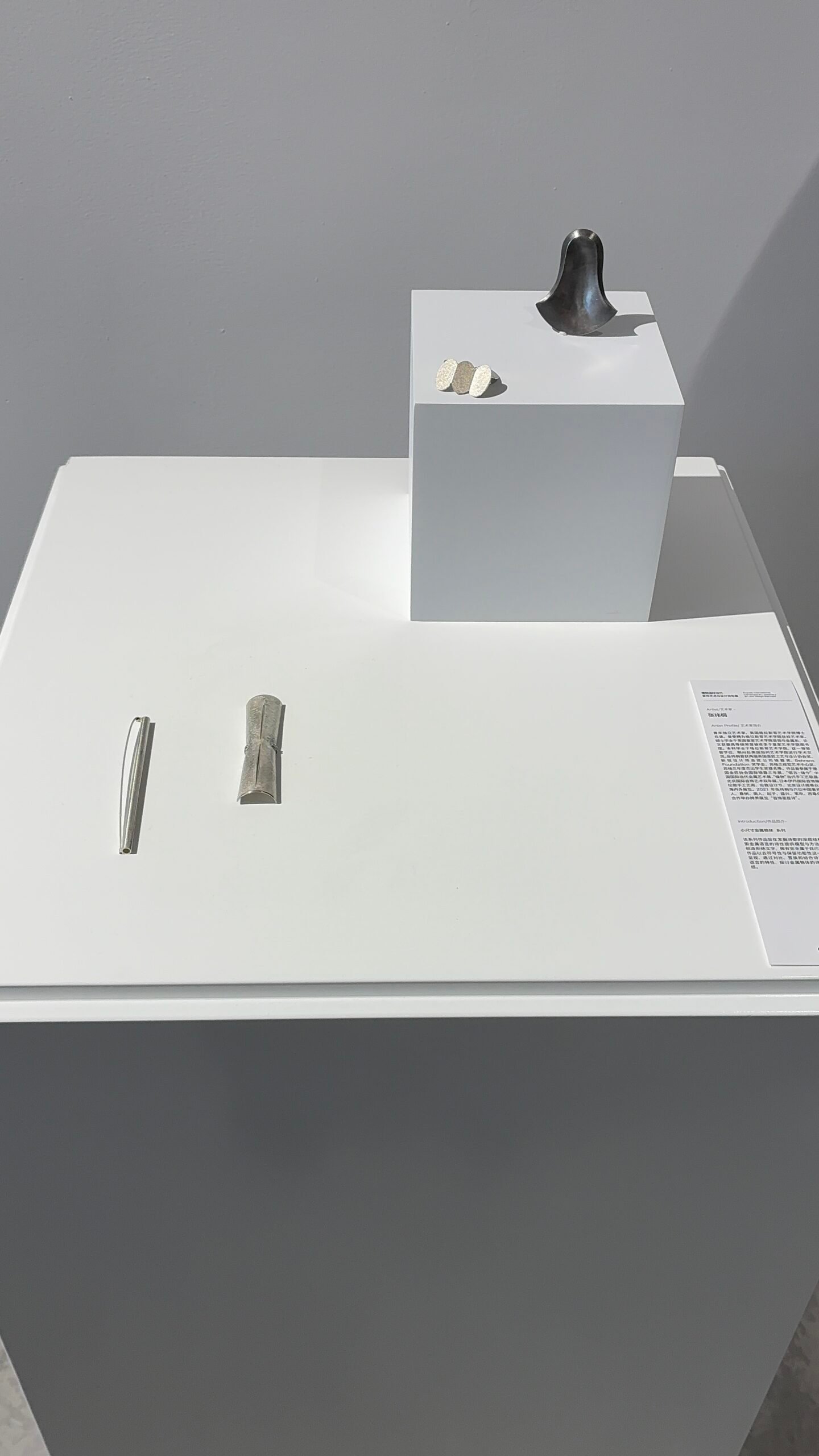
Contemporary jewellery has gradually become a ‘regular guest’ in institutions bearing external symbols of art, such as art museums and galleries. These works are interpreted through ‘exhibition labels,’ while art history and art theory are often employed to decipher such pieces. Within the framework of the ‘artworld,’ these works have already stepped into the realm of pure art, becoming vibrant representations of artistic concepts. However, ‘concept art’ itself emphasizes meaning over form. Consequently, contemporary art champions the freedom of media and the dissolution of boundaries. In this context, jewellery, as a fixed medium, appears ‘neither distant nor close’: while it breaks free from the constraints of material beauty and craftsmanship, it still grapples with the limitations of materials and function. Thus, artists not only contemplate ‘what to say’ but also need to reflect, from an ontological perspective, on ‘why it is said this way.’
This self-critique first requires deconstructing the binary opposition of ‘content versus form’—specifically, the hierarchy that prioritizes ‘artistic content’ over ‘jewellery form’—and breaking free from the circular reasoning of ‘using the medium for the medium’s sake.’ From numerous domestic works, we can discern a creative strategy or interpretive approach: bidirectional becoming. ‘Bidirectional becoming’ does not emphasize directionality but rather the connection formed when heterogeneous elements emerge and expand from two points, which can be elucidated through the lens of the ‘Rhizome Theory.’ The author allows their ‘territory of interest’ and the ‘medium of jewellery’ to simultaneously generate multiple heterogeneous extensions through the process of research and practice. The ‘connection’ between these divergent heterogeneous extensions gives rise to the artwork. Here, the ‘territory of interest’ is not the meaning or concept of the work but rather a ‘vibrant’ point that stimulates the generation of ideas. In this process, the author’s ‘territory of interest’ also establishes a relationship with the ‘medium of jewellery,’ yet the entire process of connection lacks hierarchy and remains unconstrained by the medium. Simultaneously, the ‘wishful thinking’ of binary opposition transforms into a planar network of ‘free encounters.’
Since a network structure is formed, there emerges a force that ‘tears open’ a creative line of flight, constantly testing the edges of the ‘web,’ escaping from rigid sign systems toward new, uncoded systems, thereby achieving a cycle of deterritorialization. Thus, in the horizontal ‘cross-boundary’ practice of jewellery, we witness the vibrant emergence of works that are not entirely ‘jewellery-like.’ Of course, this kind of ‘heresy’ does not represent the full posture of ‘bidirectional becoming.’ Vertically, traditional craftsmanship and culture are continuously interpreted and regenerated within the ontology of jewellery and the artists’ territory of interest, sustainably iterating their dynamic relationship with the contemporary context. As a result, the development of domestic contemporary jewellery has taken on a ‘spiral of horizontal and vertical dimensions.’
‘Vertical, Horizontal and Spiral — Invitational Exhibition of Chinese Contemporary Jewellery’ will present a series of representative works to explore the creative modes of artists, aiming to showcase the overall landscape of this field. It seeks to provide methodological references for its research and practice, while also proposing a fresh perspective for interpreting such works.